Gusty winds and mudslides damage houses, roads, and cars in Dushanbe and some other regions
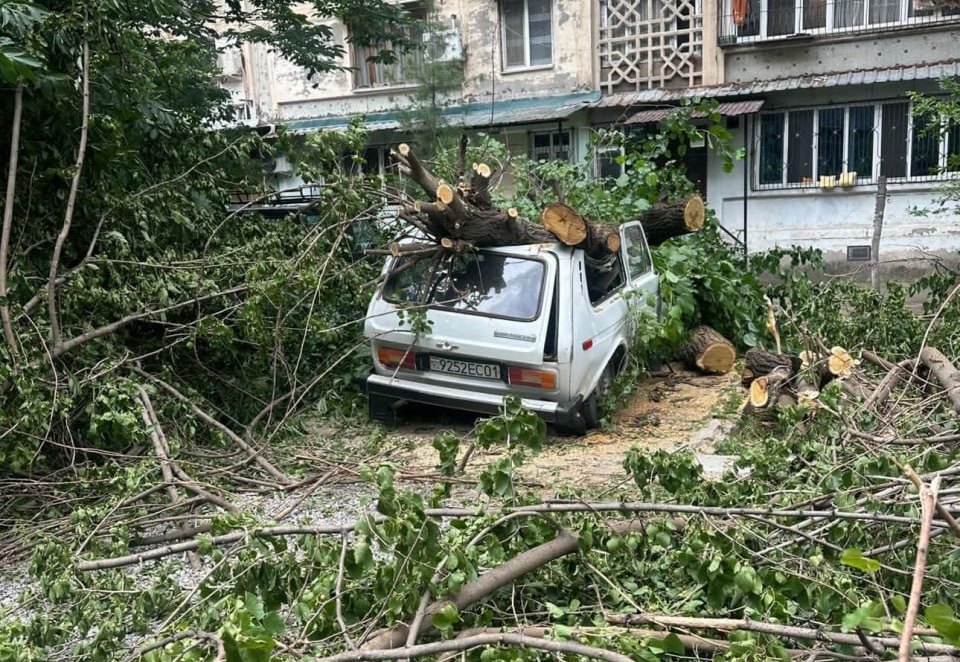
The hurricane-force wind on May 27 in Dushanbe toppled trees, damaged roofs of multi-story buildings and several cars. The consequences of the bad weather were also recorded in the Sughd Region, Vahdat, Hisor, Rudaki, Sangvor, and GBAO.
According to the Committee for Emergency Situations of Tajikistan, in the Ismoili Somoni district of the capital, 5 trees, roofs of 5 buildings, and the facade of the Communications Service building were damaged.
In the Sino district, the wind toppled or damaged 8 trees, partially damaged roofs of 3 buildings, and 3 passenger cars.
In the Firdavsi district of Dushanbe, 3 trees, roofs of 4 buildings, as well as roofs of the Training Center and the military unit of the State Committee for National Security were damaged.
In the Shohmansur district, 6 trees were toppled.
To eliminate the consequences of the disaster in the capital, rescuers from the Special Rapid Response Rescue Unit of the Committee for Emergency Situations in Dushanbe, utility services, energy workers, and other relevant structures were involved.
There are no casualties or injured in Dushanbe.
What happened in the regionsAccording to the agency, in the Sughd Region, due to prolonged precipitation and mudflows, the Asht district, Panjakent, and the Ayni district were affected.
In the village of Apponi, Oshobai Bolo jamoat of the Asht district, water and mud penetrated into 36 basement premises of residents’ auxiliary buildings. Efforts to eliminate the consequences continue with the participation of the district emergency commission, local services, and the population.
In Panjakent, mudflows damaged residential houses, roads, power lines, drinking water supply systems, irrigation networks, and agricultural lands.
According to the Committee for Emergency Situations, in Panjakent, 26 residential houses were completely damaged, and 1 house partially. Additionally, 34 auxiliary structures, 2 kilometers of roads, 13.2 km of irrigation networks, power lines, a drinking water supply line, and 70 hectares of agricultural land were affected.
Traffic on the Panjakent — Ayni highway was temporarily suspended but then fully restored. Engineering equipment, road services, energy workers, employees of the Committee for Emergency Situations, and local residents were involved in the work.
In the Ayni district, in the village of Piyon, Fondaryo jamoat, a large stone damaged one auxiliary structure. There are no casualties.
According to the Committee for Emergency Situations of Tajikistan, in the Ismoili Somoni district of the capital, 5 trees, roofs of 5 buildings, and the facade of the Communications Service building were damaged.
In the Sino district, the wind toppled or damaged 8 trees, partially damaged roofs of 3 buildings, and 3 passenger cars.
In the Firdavsi district of Dushanbe, 3 trees, roofs of 4 buildings, as well as roofs of the Training Center and the military unit of the State Committee for National Security were damaged.
In the Shohmansur district, 6 trees were toppled.
To eliminate the consequences of the disaster in the capital, rescuers from the Special Rapid Response Rescue Unit of the Committee for Emergency Situations in Dushanbe, utility services, energy workers, and other relevant structures were involved.
There are no casualties or injured in Dushanbe.
What happened in the regionsAccording to the agency, in the Sughd Region, due to prolonged precipitation and mudflows, the Asht district, Panjakent, and the Ayni district were affected.
In the village of Apponi, Oshobai Bolo jamoat of the Asht district, water and mud penetrated into 36 basement premises of residents’ auxiliary buildings. Efforts to eliminate the consequences continue with the participation of the district emergency commission, local services, and the population.
In Panjakent, mudflows damaged residential houses, roads, power lines, drinking water supply systems, irrigation networks, and agricultural lands.
According to the Committee for Emergency Situations, in Panjakent, 26 residential houses were completely damaged, and 1 house partially. Additionally, 34 auxiliary structures, 2 kilometers of roads, 13.2 km of irrigation networks, power lines, a drinking water supply line, and 70 hectares of agricultural land were affected.
Traffic on the Panjakent — Ayni highway was temporarily suspended but then fully restored. Engineering equipment, road services, energy workers, employees of the Committee for Emergency Situations, and local residents were involved in the work.
In the Ayni district, in the village of Piyon, Fondaryo jamoat, a large stone damaged one auxiliary structure. There are no casualties.
Комментарии (0)