IQAir VS Hydromet: The Truth About Air in Tajikistan
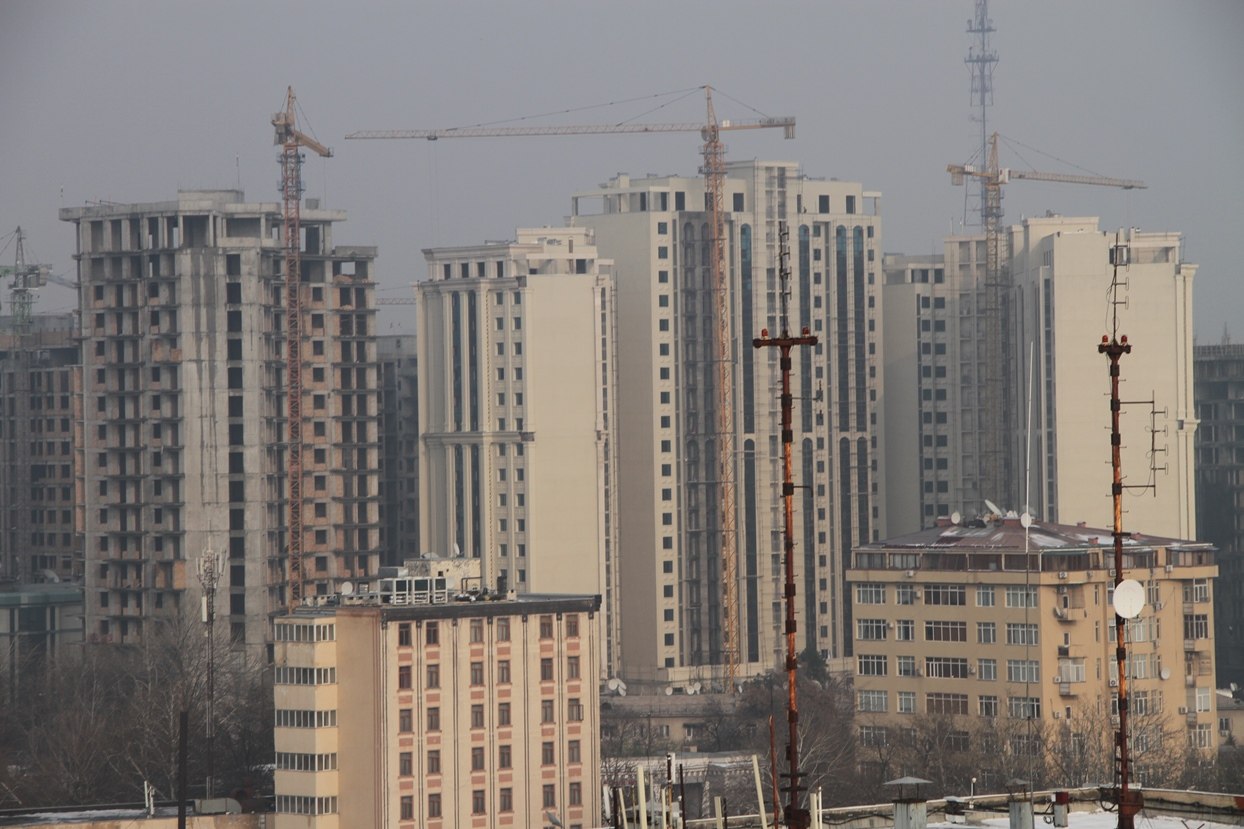
Tajikistan refutes the data from the international platform IQAir, according to which the republic is among the countries with the most polluted air in the world.
Director of the Agency for Hydrometeorology, Abdullo Kurbonzoda, stated in a meeting with journalists that the assessments presented in the «World Air Quality Report for 2025» do not reflect the real situation in the country.
According to the IQAir report, in 2025 Tajikistan ranked third in the world in terms of air pollution with a PM2.5 level of 57.3 µg/m³. This is 11.4 times higher than the level recommended by the World Health Organization.
Residents of the capital complain about black dust on windows and cars, as well as reduced visibility — in previous years, the mountains surrounding Dushanbe could be seen from any point in the capital, but now they are increasingly obscured by smog. This situation is observed even outside the periods of dust storms.
Doctors and allergists previously noted that during air pollution, the number of allergic and respiratory diseases, including bronchial asthma and allergic tracheobronchitis, increases.
«When it is written about our republic that the air is completely polluted, it is wrong,» he stated.In the official explanation of the Agency, it is also noted that such assessments «should be considered in a balanced manner, with scientific validity and a professional approach.» The agency emphasizes that the ranking is based on the annual average concentration of fine particulate matter PM2.5 and «does not fully reflect all the factors affecting atmospheric air quality in the country.»
Kurbonzoda also drew attention to significant fluctuations in air quality indicators over time. According to him, after the precipitation was restored, the situation improved significantly.
«Since December 4, 2025, there have been no dust storms in Tajikistan… In the last four months, our air has been very clean,» he stated.
Kurbonzoda says that given the natural features, Tajikistan is not one of the countries with developed industry and constant sources of severe pollution.
«Tajikistan is 93% mountains; we do not have factories and plants that heavily pollute the air. Where, then, do such data come from?» he questions.However, observations by residents and independent ecologists do not entirely confirm this assessment. Even in the absence of dust storms, Dushanbe experiences persistent pollution — in the form of smog, the smell of burning, and the accumulation of fine dust.
Such conditions may indicate a high content of suspended particles in the air, even if such phenomena are not officially classified as a dust storm.
Director of the Agency for Hydrometeorology, Abdullo Kurbonzoda, stated in a meeting with journalists that the assessments presented in the «World Air Quality Report for 2025» do not reflect the real situation in the country.
According to the IQAir report, in 2025 Tajikistan ranked third in the world in terms of air pollution with a PM2.5 level of 57.3 µg/m³. This is 11.4 times higher than the level recommended by the World Health Organization.
In 2024, according to IQAir, Tajikistan was ranked 6th in terms of air quality, while in 2023, data specifically for Dushanbe placed the capital in 4th place.The issue of air quality in Tajikistan, particularly in its capital, has remained relevant for several years. International monitoring services, the Committee for Emergency Situations and Civil Defense, and the city’s own residents regularly report on pollution. Media publications over recent years point to this as well.
Residents of the capital complain about black dust on windows and cars, as well as reduced visibility — in previous years, the mountains surrounding Dushanbe could be seen from any point in the capital, but now they are increasingly obscured by smog. This situation is observed even outside the periods of dust storms.
Doctors and allergists previously noted that during air pollution, the number of allergic and respiratory diseases, including bronchial asthma and allergic tracheobronchitis, increases.
The main sources of pollution in Tajikistan: dust and degraded soil, heating of the private sector with solid fuels, energy, and transport.Tajikistan’s Hydromet: IQAir data is questionableThe authorities of Tajikistan question the conclusions of the IQAir report, pointing to the discrepancy between the presented data and the actually recorded air quality indicators in the country. Director of the Agency for Hydrometeorology, Abdullo Kurbonzoda, emphasized on April 3 at a meeting with journalists that the assessments used in the report do not reflect an accurate picture.
«When it is written about our republic that the air is completely polluted, it is wrong,» he stated.In the official explanation of the Agency, it is also noted that such assessments «should be considered in a balanced manner, with scientific validity and a professional approach.» The agency emphasizes that the ranking is based on the annual average concentration of fine particulate matter PM2.5 and «does not fully reflect all the factors affecting atmospheric air quality in the country.»
Kurbonzoda also drew attention to significant fluctuations in air quality indicators over time. According to him, after the precipitation was restored, the situation improved significantly.
«Since December 4, 2025, there have been no dust storms in Tajikistan… In the last four months, our air has been very clean,» he stated.
Kurbonzoda says that given the natural features, Tajikistan is not one of the countries with developed industry and constant sources of severe pollution.
«Tajikistan is 93% mountains; we do not have factories and plants that heavily pollute the air. Where, then, do such data come from?» he questions.However, observations by residents and independent ecologists do not entirely confirm this assessment. Even in the absence of dust storms, Dushanbe experiences persistent pollution — in the form of smog, the smell of burning, and the accumulation of fine dust.
Such conditions may indicate a high content of suspended particles in the air, even if such phenomena are not officially classified as a dust storm.
Комментарии (0)