Three sensations that dispelled the “Bactrian Mirage”
In the legends and myths of various peoples, ancient written sources, and classical literature, there was often mention of an amazing and very wealthy gold-bearing country located in the East — Bactria. Manuscripts from Mesopotamia and India report that lapis lazuli was mined in the mountains of Bactria (Badakhshan), from which jewelry and seals were made as early as the 3rd millennium BC. Badakhshan lapis lazuli was even found in items from Tutankhamun’s tomb.
Assyrian sources report that two-humped Bactrian camels were brought from Bactria. The ancient Greek writer Apollodorus calls Bactria «the ornament of all Ariana.»
In 1947, French archaeologist A. Foucher, conducting excavations in Balkh, did not find ancient layers there and declared ancient Bactria a mirage, stating that before the Achaemenid conquest of the 6th century BC, there was no agricultural culture here.
The expression «Bactrian mirage» became very popular at that time and for a long time intrigued many scholars, antiquity enthusiasts, travelers, and adventurers. Accidental finds caused, on the one hand, great interest, and on the other hand, bewilderment — how in the same artifacts elements of Greek-Mediterranean, Achaemenid, Eastern-Iranian, and Indian art were surprisingly combined.
In the 1960s, in the valley of the Kafirnigan River, archaeologist A. Mandelstam discovered an ancient burial site of cattle breeders from the 2nd millennium BC. He called it the Bishkent culture, proving that it existed 1000 years before the Achaemenid conquest.
Renowned archaeologist from Tajikistan B. Litvinsky discovered in Tajikistan monuments of the Vakhsh culture very similar to the Bishkent culture. Researchers linked these two cultures of southern Tajikistan with the migration of Indo-Iranian tribes.
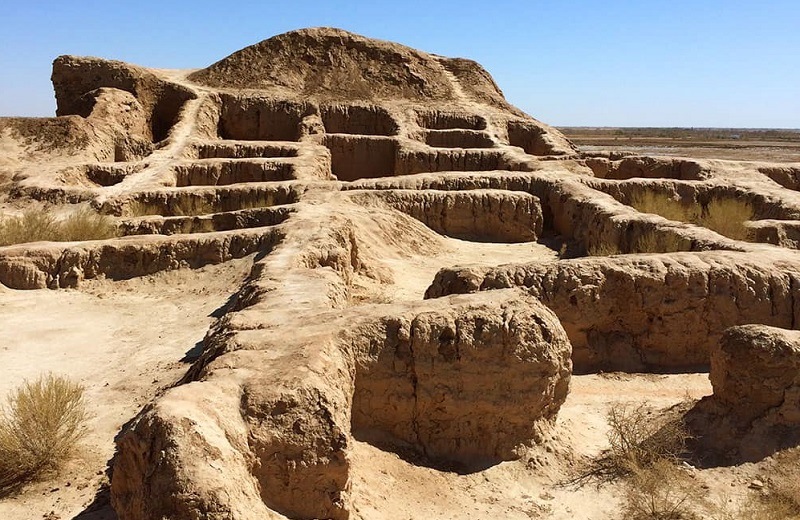
In 1968, excavations in the Surkhandarya region revealed the settlement of Sapallitepa, with a fortified fortress in the center, numerous houses, and a necropolis, once again confirming the reality of mythical Bactria as a center of ancient agricultural civilization.
After the discovery of the Sapallitepa settlement, more than twenty monuments were found and studied in this region. These are fortified settlements with monumental adobe structures: the palace and temple of Dashly 3, the Winter and Summer palaces of Altyn 10, the round-plan structures of Kutlug-tepe, and others.
Among the finds are pottery ceramics, bronze vessels, stone and bronze seals with zoomorphic, anthropomorphic, and geometric motifs.
Thanks to the large-scale excavations of archaeologist V. Sarianidi in southern Turkmenistan, in ancient Margiana, the existence of a major center of ancient Eastern civilization in the 3rd — early 2nd millennium BC was proven.
Комментарии (0)