Strait of Hormuz closed after U.S.-Israeli strikes on Tehran, sending shockwaves through global energy markets
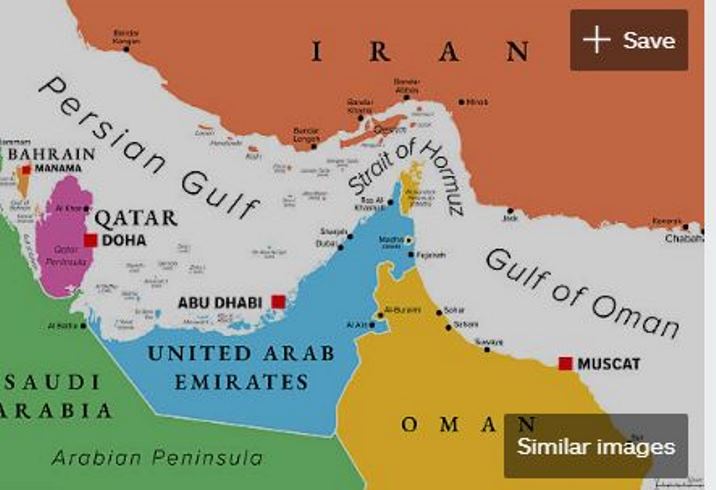
Media reports say Iranian forces have closed the Strait of Hormuz, while major aviation hubs in the United Arab Emirates were reportedly taken offline following U.S.-Israeli military strikes against Tehran. The developments have triggered immediate concern across global energy and financial markets.
The closure reportedly effectively removes up to 20 million barrels of oil per day from global supply chains, posing a direct threat to the energy security of major Asian and European economies. In addition, a 20% reduction in global liquefied natural gas (LNG) flows is raising fears of industrial slowdowns and domestic energy shortages in key importing nations.
Policymakers and investors are now grappling with the abrupt disruption of regional logistics and the suspension of trade along one of the world’s most critical maritime corridors linking the Middle East to the Indo-Pacific.
The Strait of Hormuz is widely regarded as the world’s most important oil transit chokepoint, accounting for roughly 20% of global petroleum liquids trade. In 2024, an average of 20 million barrels per day passed through the narrow waterway, a volume that remained steady into early 2025. Beyond crude oil, the strait also handles about 20% of global LNG trade, primarily from Qatar’s vast North Field.
According to the International Energy Agency (IEA), global oil demand stood at 104.87 million barrels per day in February 2026. Asian economies—including China, India, Japan, and South Korea—receive more than 80% of the crude oil shipped through the strait. In 2025, China’s crude imports reached a record 11.6 million barrels per day, with Middle Eastern suppliers accounting for a substantial share.
The sudden removal of 20 million barrels per day from the market has already driven a sharp rise in Brent crude prices. Analysts warn that if the blockade extends beyond 72 hours, prices could climb above 100 $ per barrel. Higher crude prices would inevitably push up the cost of refined fuels, placing additional strain on transportation and logistics sectors worldwide.
Energy analysts caution that a prolonged closure of the Strait of Hormuz could trigger a shock comparable to the energy crises of the 1970s. CNBC reports that Saul Kavonic, head of energy research at MST Marquee, said the situation «could present a scenario three times the severity of the Arab oil embargo and Iranian revolution in the 1970s, driving oil prices into triple digits while LNG prices retest the record highs of 2022.»
The closure reportedly effectively removes up to 20 million barrels of oil per day from global supply chains, posing a direct threat to the energy security of major Asian and European economies. In addition, a 20% reduction in global liquefied natural gas (LNG) flows is raising fears of industrial slowdowns and domestic energy shortages in key importing nations.
Policymakers and investors are now grappling with the abrupt disruption of regional logistics and the suspension of trade along one of the world’s most critical maritime corridors linking the Middle East to the Indo-Pacific.
The Strait of Hormuz is widely regarded as the world’s most important oil transit chokepoint, accounting for roughly 20% of global petroleum liquids trade. In 2024, an average of 20 million barrels per day passed through the narrow waterway, a volume that remained steady into early 2025. Beyond crude oil, the strait also handles about 20% of global LNG trade, primarily from Qatar’s vast North Field.
According to the International Energy Agency (IEA), global oil demand stood at 104.87 million barrels per day in February 2026. Asian economies—including China, India, Japan, and South Korea—receive more than 80% of the crude oil shipped through the strait. In 2025, China’s crude imports reached a record 11.6 million barrels per day, with Middle Eastern suppliers accounting for a substantial share.
The sudden removal of 20 million barrels per day from the market has already driven a sharp rise in Brent crude prices. Analysts warn that if the blockade extends beyond 72 hours, prices could climb above 100 $ per barrel. Higher crude prices would inevitably push up the cost of refined fuels, placing additional strain on transportation and logistics sectors worldwide.
Energy analysts caution that a prolonged closure of the Strait of Hormuz could trigger a shock comparable to the energy crises of the 1970s. CNBC reports that Saul Kavonic, head of energy research at MST Marquee, said the situation «could present a scenario three times the severity of the Arab oil embargo and Iranian revolution in the 1970s, driving oil prices into triple digits while LNG prices retest the record highs of 2022.»
Комментарии (0)