Teacher shortage and quality issues: what's wrong in Tajikistan's schools?
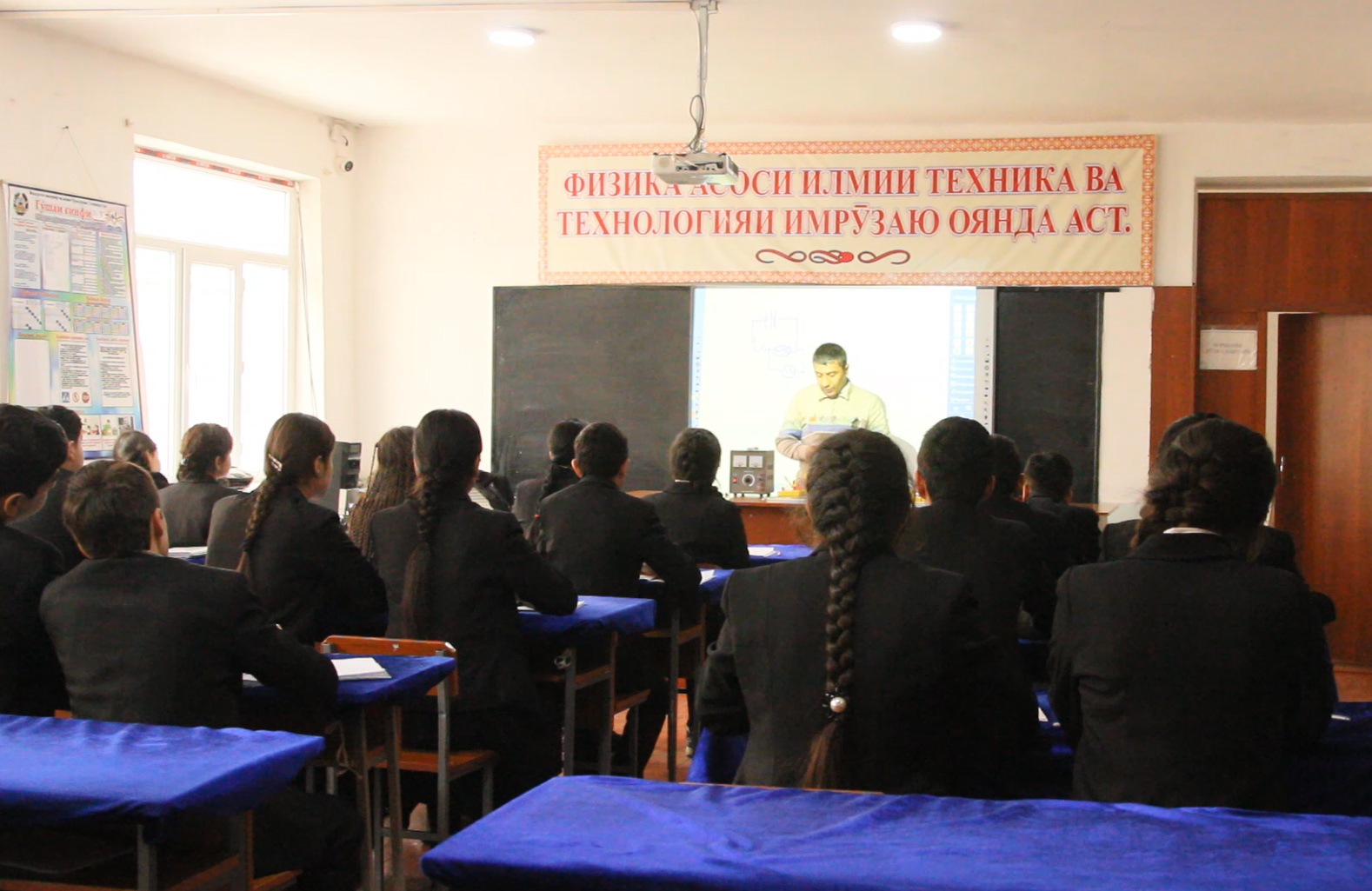
«The shortage of teachers in Tajikistan’s schools has been completely resolved,» recently declared the Ministry of Education. The statistics look convincing: thousands of new teachers, formally closed vacancies, no shortage of staff.
But once you step away from the reports and enter the classrooms, the reality seems entirely different—teachers in the country are «plentiful» only on paper.
From shortage to «full staffing»
In the 2025-2026 school year, over 9,000 new teachers were hired in Tajikistan’s schools. This was announced at a recent press conference by Deputy Minister of Education Ravshan Karimzoda, who emphasized that the issue of teacher shortages has now been fully resolved.
Just six months earlier, in the summer of 2025, Education Minister Rahim Saidzoda had spoken about the shortage of nearly 4,000 teachers across the country. Since then, the situation, according to reports, has drastically changed.
Officially, the number of teachers has increased by more than 5,000 compared to the previous year, which is said to indicate that the system has reached a stable level. However, the Ministry acknowledged that around 700 teachers are working outside of their specialty, and a significant number of teachers are temporarily replacing colleagues on maternity leave. These nuances are described as technical details, and they seemingly do not change the overall picture: schools are considered staffed.
But the crucial question remains—have parents and students felt these changes? «Asia-Plus» asked directly, and the answers were, unsurprisingly, telling.
«No problem,» but teachers are still lacking
The statements claiming that the teacher shortage has been entirely resolved don’t align with what parents and educators see on the ground—there is still a shortage of teachers.
A telling example comes from the Ziyodullo Shahidi Music School in Dushanbe, where, according to parents, there has been no algebra teacher in the 11th grade since the beginning of the school year. Similar situations are reported from other schools. Parents note that after a teacher leaves, the school often goes without a replacement for an indefinite period:
· «At the Presidential Lyceum in Buston, the primary school teacher left for another school, and there has been no replacement for two weeks.»
· «School No. 46 in the Rudaki district lacks a foreign language teacher in the primary classes.»
· «In School No. 54 in Dushanbe, the senior classes with Russian as the language of instruction have no math teacher.»
· «In School No. 54 in Dushanbe, only two out of five lessons were held today. There were no teachers for the other subjects. A teacher might be giving lessons to three classes at the same time.»
These cases are not isolated.
· «We moved our children from a public school to a private one precisely because of the shortage of teachers.»
· «In School No. 32 in Dushanbe, there is no Russian language teacher.»
· «Teachers are still lacking. And don’t be deceived. The real situation in schools is very different from what is presented in press conferences.»
A teacher exists, but not for their subject
Many parents pointed out that the real problem today isn’t whether there is a teacher, but rather who is teaching the classes.
Parents and educators speak of schools where algebra and geometry are taught by a physicist, history by a mathematician, and English by a graduate of an entirely different faculty.
· «Even in a fairly expensive gymnasium, the algebra and geometry teacher teaches physics. Well, teaches? They just write notes,» complained a reader from Dushanbe.
Formally, lessons are held according to the schedule, but according to parents, the content of the classes increasingly boils down to copying notes and mere «seat warming.»
· «Worse still is when the teacher teaches a subject outside their specialty. It’s as if the teacher is there, but in reality, it’s better if they’re not,» confessed one commenter.
Others noted that such practices have become a forced norm, especially in regions where schools are ready to accept any specialist just to fill gaps in the schedule:
· «We graduated from the Faculty of History and Law, and one of my classmates is now teaching English in his village school because there’s simply no teacher.»
Under these conditions, children quickly lose interest in the subject and their motivation to learn because, in essence, there’s little difference between having a lesson or not.
· «All the skilled teachers left for work in Russia. 90% of them received citizenship, took out mortgages, and now live in their own homes. I wanted to write about the problems I face as a teacher in a public school, but let’s not dwell on the bad…» said one teacher.
Many readers note that even teachers often lack basic literacy, and attempts to «fill the gaps» with students do not resolve the issue:
· «There needs to be a strict selection process in education. We must understand the significance of teachers on a large scale. When will the issue of professional competency be addressed? More than 90% of current teachers do not meet the requirements, and this is a huge social problem. It’s time to invest in education; it’s the best investment in the nation’s future.»
· «It’s not the shortage of teachers in schools; it’s the shortage of 'intellect.' Instead of providing children with knowledge, they focus on their hairstyles and appearance! That’s where you need to focus your attention.»
One teacher for fifty students
Even in schools that are formally staffed, parents complain about another problem—overcrowded classrooms with 40-50 students:
· «We have 52 students in the class. They can’t divide the class because there’s no teacher.»
· «In one class in Buston, there are 48 students.»
Parents acknowledge that with such overcrowding, discussions about the quality of education become irrelevant.
· «Poor teachers are exhausted by the third lesson, I can only imagine their workload,» writes a mother of a student at a Dushanbe gymnasium, where classrooms hold 42-47 students. «Sadly, with so many students in each class, what can you expect from the quality of education?»
Some commenters point out that the problem is not only the shortage of teachers but also the lack of schools and basic conditions:
· «There are not enough teachers, and not enough places for students. Three students sit at each desk.»
Problems in Russian-language classes
Parents also report issues in Russian-language classes. Many consciously choose these classes, expecting a certain level of instruction, but find themselves faced with a completely different reality:
· «My daughter has spoken only Russian since childhood. Since I’m sending her to a Russian school and a Russian class, I expect proper education. If I wanted her to study in Tajik, I would have sent her to a Tajik school. Can we at least ensure they do their work competently and skillfully, as we are sending children to school to learn and gain knowledge?»
And these are not isolated cases:
· «My daughter went to the first grade. The teachers are unqualified, write with mistakes, and speak Tajik in the Russian class. Not all families can afford private or expensive schools, and the public system doesn’t provide the desired quality.»
· «Osimi Gymnasium in Dushanbe lacks a Russian language and literature teacher.»
· «At the Presidential Lyceum in Buston, the primary school teacher left, and there has been no replacement for two weeks in the Russian group.»
In the comments, there is also concern about the culture of communication in schools. One mother recalls overhearing teachers yelling and swearing into the microphone during a ceremony:
· «Where is their competent speech, tactics, and methods of education?»
Physical education without physical education and schools without men
Some comments address subjects that are effectively excluded from the educational process. Physical education is frequently mentioned:
· «In many schools, there are no physical education classes; either they write notes, or just walk around the school.»
Others specify that there are almost no qualified physical education teachers left:
· «The critical situation surrounding this subject is already bearing unwanted fruits. In almost all general education schools (and even in lyceums and gymnasiums), both junior and senior classes lack good physical education teachers. It’s terrible. And I won’t even mention other subjects…»
Some commenters also highlight a systemic issue—the near-total absence of male teachers in schools:
· «95% of teachers are women, and there are almost no men. This affects the development of children.»
The root of all these problems is well-known and has been discussed for years. Salaries for Tajik teachers remain among the lowest in the region, while workloads are excessive. The situation is particularly dire in rural and remote schools. Additionally, teachers are often burdened with endless paperwork and checks.
An ongoing issue is the practice of involving teachers in the cotton harvest campaigns, which lasts for months and effectively removes them from the educational process, as well as compulsory meetings with high-ranking guests and mandatory community workdays.
Until these systemic issues are addressed, the annual graduation of new educators is unlikely to change the situation. Young specialists either leave for other sectors, go abroad for work, or remain in schools without significant motivation.
But once you step away from the reports and enter the classrooms, the reality seems entirely different—teachers in the country are «plentiful» only on paper.
From shortage to «full staffing»
In the 2025-2026 school year, over 9,000 new teachers were hired in Tajikistan’s schools. This was announced at a recent press conference by Deputy Minister of Education Ravshan Karimzoda, who emphasized that the issue of teacher shortages has now been fully resolved.
Just six months earlier, in the summer of 2025, Education Minister Rahim Saidzoda had spoken about the shortage of nearly 4,000 teachers across the country. Since then, the situation, according to reports, has drastically changed.
Officially, the number of teachers has increased by more than 5,000 compared to the previous year, which is said to indicate that the system has reached a stable level. However, the Ministry acknowledged that around 700 teachers are working outside of their specialty, and a significant number of teachers are temporarily replacing colleagues on maternity leave. These nuances are described as technical details, and they seemingly do not change the overall picture: schools are considered staffed.
But the crucial question remains—have parents and students felt these changes? «Asia-Plus» asked directly, and the answers were, unsurprisingly, telling.
«No problem,» but teachers are still lacking
The statements claiming that the teacher shortage has been entirely resolved don’t align with what parents and educators see on the ground—there is still a shortage of teachers.
A telling example comes from the Ziyodullo Shahidi Music School in Dushanbe, where, according to parents, there has been no algebra teacher in the 11th grade since the beginning of the school year. Similar situations are reported from other schools. Parents note that after a teacher leaves, the school often goes without a replacement for an indefinite period:
· «At the Presidential Lyceum in Buston, the primary school teacher left for another school, and there has been no replacement for two weeks.»
· «School No. 46 in the Rudaki district lacks a foreign language teacher in the primary classes.»
· «In School No. 54 in Dushanbe, the senior classes with Russian as the language of instruction have no math teacher.»
· «In School No. 54 in Dushanbe, only two out of five lessons were held today. There were no teachers for the other subjects. A teacher might be giving lessons to three classes at the same time.»
These cases are not isolated.
· «We moved our children from a public school to a private one precisely because of the shortage of teachers.»
· «In School No. 32 in Dushanbe, there is no Russian language teacher.»
· «Teachers are still lacking. And don’t be deceived. The real situation in schools is very different from what is presented in press conferences.»
A teacher exists, but not for their subject
Many parents pointed out that the real problem today isn’t whether there is a teacher, but rather who is teaching the classes.
Parents and educators speak of schools where algebra and geometry are taught by a physicist, history by a mathematician, and English by a graduate of an entirely different faculty.
· «Even in a fairly expensive gymnasium, the algebra and geometry teacher teaches physics. Well, teaches? They just write notes,» complained a reader from Dushanbe.
Formally, lessons are held according to the schedule, but according to parents, the content of the classes increasingly boils down to copying notes and mere «seat warming.»
· «Worse still is when the teacher teaches a subject outside their specialty. It’s as if the teacher is there, but in reality, it’s better if they’re not,» confessed one commenter.
Others noted that such practices have become a forced norm, especially in regions where schools are ready to accept any specialist just to fill gaps in the schedule:
· «We graduated from the Faculty of History and Law, and one of my classmates is now teaching English in his village school because there’s simply no teacher.»
Under these conditions, children quickly lose interest in the subject and their motivation to learn because, in essence, there’s little difference between having a lesson or not.
· «All the skilled teachers left for work in Russia. 90% of them received citizenship, took out mortgages, and now live in their own homes. I wanted to write about the problems I face as a teacher in a public school, but let’s not dwell on the bad…» said one teacher.
Many readers note that even teachers often lack basic literacy, and attempts to «fill the gaps» with students do not resolve the issue:
· «There needs to be a strict selection process in education. We must understand the significance of teachers on a large scale. When will the issue of professional competency be addressed? More than 90% of current teachers do not meet the requirements, and this is a huge social problem. It’s time to invest in education; it’s the best investment in the nation’s future.»
· «It’s not the shortage of teachers in schools; it’s the shortage of 'intellect.' Instead of providing children with knowledge, they focus on their hairstyles and appearance! That’s where you need to focus your attention.»
One teacher for fifty students
Even in schools that are formally staffed, parents complain about another problem—overcrowded classrooms with 40-50 students:
· «We have 52 students in the class. They can’t divide the class because there’s no teacher.»
· «In one class in Buston, there are 48 students.»
Parents acknowledge that with such overcrowding, discussions about the quality of education become irrelevant.
· «Poor teachers are exhausted by the third lesson, I can only imagine their workload,» writes a mother of a student at a Dushanbe gymnasium, where classrooms hold 42-47 students. «Sadly, with so many students in each class, what can you expect from the quality of education?»
Some commenters point out that the problem is not only the shortage of teachers but also the lack of schools and basic conditions:
· «There are not enough teachers, and not enough places for students. Three students sit at each desk.»
Problems in Russian-language classes
Parents also report issues in Russian-language classes. Many consciously choose these classes, expecting a certain level of instruction, but find themselves faced with a completely different reality:
· «My daughter has spoken only Russian since childhood. Since I’m sending her to a Russian school and a Russian class, I expect proper education. If I wanted her to study in Tajik, I would have sent her to a Tajik school. Can we at least ensure they do their work competently and skillfully, as we are sending children to school to learn and gain knowledge?»
And these are not isolated cases:
· «My daughter went to the first grade. The teachers are unqualified, write with mistakes, and speak Tajik in the Russian class. Not all families can afford private or expensive schools, and the public system doesn’t provide the desired quality.»
· «Osimi Gymnasium in Dushanbe lacks a Russian language and literature teacher.»
· «At the Presidential Lyceum in Buston, the primary school teacher left, and there has been no replacement for two weeks in the Russian group.»
In the comments, there is also concern about the culture of communication in schools. One mother recalls overhearing teachers yelling and swearing into the microphone during a ceremony:
· «Where is their competent speech, tactics, and methods of education?»
Physical education without physical education and schools without men
Some comments address subjects that are effectively excluded from the educational process. Physical education is frequently mentioned:
· «In many schools, there are no physical education classes; either they write notes, or just walk around the school.»
Others specify that there are almost no qualified physical education teachers left:
· «The critical situation surrounding this subject is already bearing unwanted fruits. In almost all general education schools (and even in lyceums and gymnasiums), both junior and senior classes lack good physical education teachers. It’s terrible. And I won’t even mention other subjects…»
Some commenters also highlight a systemic issue—the near-total absence of male teachers in schools:
· «95% of teachers are women, and there are almost no men. This affects the development of children.»
The root of all these problems is well-known and has been discussed for years. Salaries for Tajik teachers remain among the lowest in the region, while workloads are excessive. The situation is particularly dire in rural and remote schools. Additionally, teachers are often burdened with endless paperwork and checks.
An ongoing issue is the practice of involving teachers in the cotton harvest campaigns, which lasts for months and effectively removes them from the educational process, as well as compulsory meetings with high-ranking guests and mandatory community workdays.
Until these systemic issues are addressed, the annual graduation of new educators is unlikely to change the situation. Young specialists either leave for other sectors, go abroad for work, or remain in schools without significant motivation.
Комментарии (0)