Coalition of Willing Commits to Ukraine Force if Peace Agreed
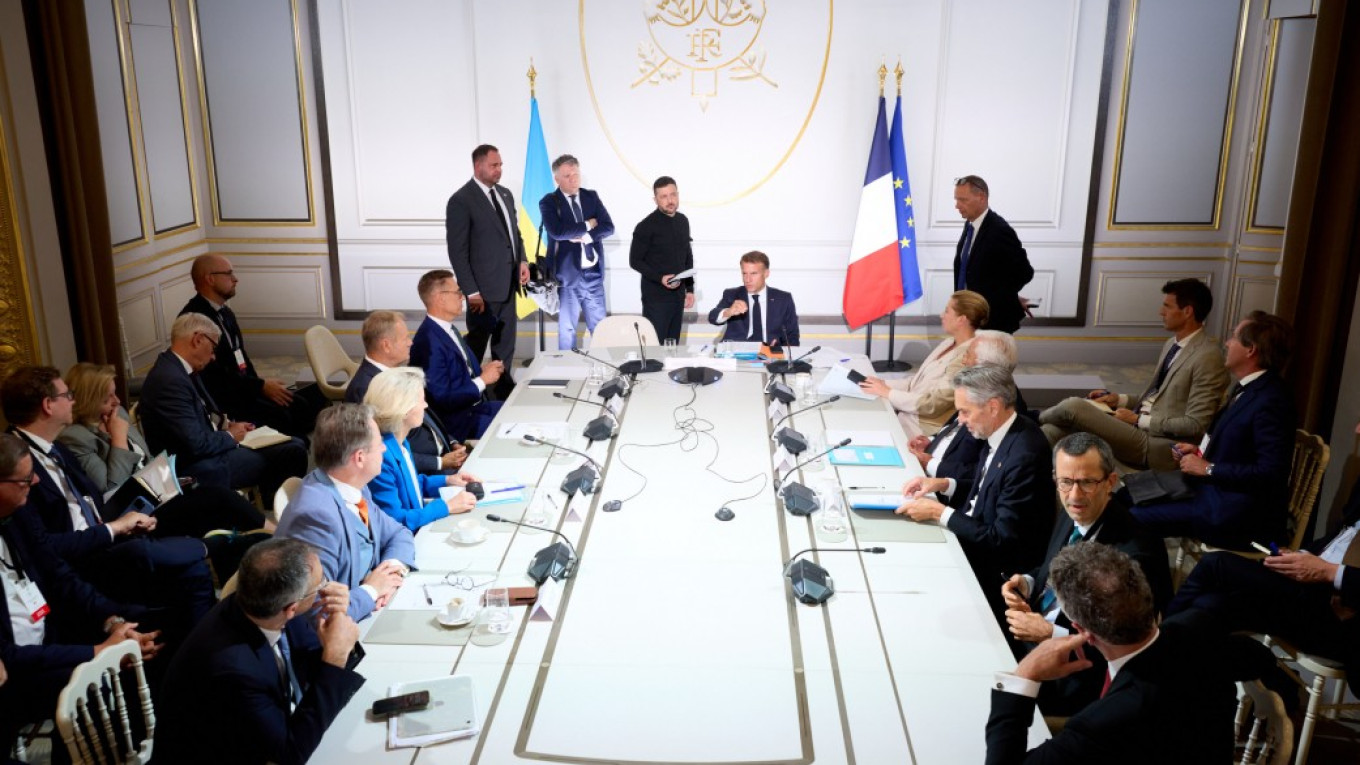
More than two dozen countries have pledged to join a force to deploy in Ukraine after any eventual peace deal with Russia, aiming to deter Moscow from again attacking its neighbor, leaders announced Thursday.
A «reassurance force» for Ukraine is a key pillar of the security guarantees a coalition of mainly European countries want to offer to Ukraine if the war ends via a peace deal or a ceasefire.
However there is also growing concern that Russian President Vladimir Putin is now showing no interest in a peace accord, with alarm intensifying after his high-profile visit to Beijing this week.
And the extent of any U.S. involvement in any eventual security backstop remains uncertain, even after European leaders spoke to President Donald Trump via video conference following the summit in Paris of the so-called «coalition of the willing.»
It was hosted by French President Emmanuel Macron and attended by Ukraine’s President Volodymyr Zelensky, while others, like U.K. premier Keir Starmer, participated remotely.
The meeting represented a new push led by Macron to show that Europe can act independently of Washington after Trump upended U.S. foreign policy and launched direct talks with Putin after returning to the White House.
The United States was represented by Trump’s special envoy Steve Witkoff, who also met with Zelensky separately.
'First concrete step’Europe has been under pressure to step up its response over three and a half years after Russia launched its full-scale invasion in February 2022.
«We have today 26 countries who have formally committed — some others have not yet taken a position — to deploy as a 'reassurance force' troops in Ukraine, or be present on the ground, in the sea, or in the air,» Macron told reporters, standing alongside Zelensky.
Zelensky hailed the move. «I think that today, for the first time in a long time, this is the first such serious concrete step,» he said.
The troops would not be deployed «on the front line» but aim to «prevent any new major aggression,» the French president said.
Macron added that another major pillar was a «regeneration» of the Ukrainian army so that it can «not just resist a new attack but dissuade Russia from a new aggression.»
Macron said the United States was being «very clear» about its willingness to participate in security guarantees for Ukraine.
However, the American contribution remains unclear.
There are also divisions within the coalition, with German Chancellor Friedrich Merz urging more pressure but remaining cautious about the scope of involvement.
«Germany will decide on military involvement at the appropriate time once the framework conditions have been clarified,» a German government spokesman said after the summit.
Taking a similar line, Prime Minister Giorgia Meloni reiterated that Italy will not send troops to Ukraine, but it could help monitor any potential peace deal, her office said.
Before the Paris talks, Russian Foreign Ministry spokeswoman Maria Zakharova said Moscow would not agree to the deployment of foreign troops in Ukraine «in any format."
A «reassurance force» for Ukraine is a key pillar of the security guarantees a coalition of mainly European countries want to offer to Ukraine if the war ends via a peace deal or a ceasefire.
However there is also growing concern that Russian President Vladimir Putin is now showing no interest in a peace accord, with alarm intensifying after his high-profile visit to Beijing this week.
And the extent of any U.S. involvement in any eventual security backstop remains uncertain, even after European leaders spoke to President Donald Trump via video conference following the summit in Paris of the so-called «coalition of the willing.»
It was hosted by French President Emmanuel Macron and attended by Ukraine’s President Volodymyr Zelensky, while others, like U.K. premier Keir Starmer, participated remotely.
The meeting represented a new push led by Macron to show that Europe can act independently of Washington after Trump upended U.S. foreign policy and launched direct talks with Putin after returning to the White House.
The United States was represented by Trump’s special envoy Steve Witkoff, who also met with Zelensky separately.
'First concrete step’Europe has been under pressure to step up its response over three and a half years after Russia launched its full-scale invasion in February 2022.
«We have today 26 countries who have formally committed — some others have not yet taken a position — to deploy as a 'reassurance force' troops in Ukraine, or be present on the ground, in the sea, or in the air,» Macron told reporters, standing alongside Zelensky.
Zelensky hailed the move. «I think that today, for the first time in a long time, this is the first such serious concrete step,» he said.
The troops would not be deployed «on the front line» but aim to «prevent any new major aggression,» the French president said.
Macron added that another major pillar was a «regeneration» of the Ukrainian army so that it can «not just resist a new attack but dissuade Russia from a new aggression.»
Macron said the United States was being «very clear» about its willingness to participate in security guarantees for Ukraine.
However, the American contribution remains unclear.
There are also divisions within the coalition, with German Chancellor Friedrich Merz urging more pressure but remaining cautious about the scope of involvement.
«Germany will decide on military involvement at the appropriate time once the framework conditions have been clarified,» a German government spokesman said after the summit.
Taking a similar line, Prime Minister Giorgia Meloni reiterated that Italy will not send troops to Ukraine, but it could help monitor any potential peace deal, her office said.
Before the Paris talks, Russian Foreign Ministry spokeswoman Maria Zakharova said Moscow would not agree to the deployment of foreign troops in Ukraine «in any format."
Комментарии (0)