Tajikistan to increase energy sector funding by 80% in 2026
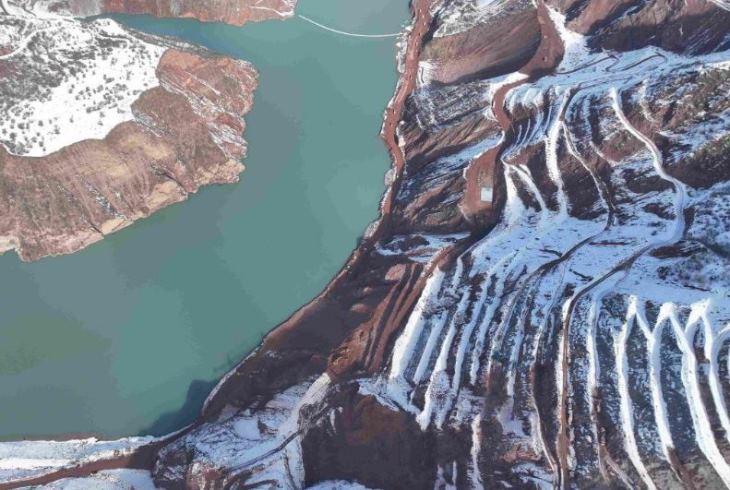
In 2026, Tajikistan plans to increase its budgetary allocation for the energy sector by 80%, amounting to 15 billion somonis (over 1.6 $ billion), which will represent 22,4% of the total state budget.
Experts believe that a significant portion of this funding will be directed towards the completion of the Roghun Hydroelectric Power Plant (HPP), the country’s largest energy project.
Roghun HPP: from resumption to 6.2 $ billion
The construction of the Rogun HPP was resumed in 2008, with the initial project cost estimated at 3 $ billion. However, the current cost is now pegged at 6.2 $ billion, due to rising construction expenses and the need for infrastructure modernization.
To finance the completion of Roghun, Tajikistan has secured agreements with international partners totaling over 2 $ billion. These include grants from the World Bank amounting to 650 $ million, loans from the Asian Infrastructure Investment Bank (500 $ million), as well as funds from the Islamic Development Bank and Arab funds totaling 450 $ million. Additionally, the Qatari Fund for Development has provided a grant of 50 $ million. Negotiations are ongoing to secure an additional 1.7 $ billion.
About Roghun hydropower plant
With an installed capacity of 3,780 MW, the Roghun Hydroelectric Plant is set to become the largest hydroelectric power station in Central Asia. The plant will feature six turbines, each with a capacity of 630 MW, with the final turbine expected to be launched by 2029.
Currently, two turbines of the Roghun station, which were commissioned in 2018 and 2019, are operating at partial capacity. According to the Ministry of Energy, the plant generated over 1.2 billion kWh of electricity in 2024, which accounted for 5,5% of the total electricity produced in Tajikistan last year.
Once fully operational, Roghun is expected to generate over 14.5 billion kWh annually.
Long-term goals and energy security prospects
The completion of the Roghun HPP, with a capacity of 3,600 MW, is expected to significantly enhance Tajikistan’s energy independence, ensuring stable electricity supplies for both domestic consumption and export to neighboring countries. The government hopes the project will become the cornerstone of sustainable economic development and help address water supply and irrigation issues in rural areas.
Prospects for further investment
In addition, further investments are planned to develop Tajikistan’s energy infrastructure, including projects related to renewable energy sources and the modernization of existing power facilities. These efforts aim to strengthen the country’s energy security and reduce dependence on external energy resources.
Experts believe that a significant portion of this funding will be directed towards the completion of the Roghun Hydroelectric Power Plant (HPP), the country’s largest energy project.
Roghun HPP: from resumption to 6.2 $ billion
The construction of the Rogun HPP was resumed in 2008, with the initial project cost estimated at 3 $ billion. However, the current cost is now pegged at 6.2 $ billion, due to rising construction expenses and the need for infrastructure modernization.
To finance the completion of Roghun, Tajikistan has secured agreements with international partners totaling over 2 $ billion. These include grants from the World Bank amounting to 650 $ million, loans from the Asian Infrastructure Investment Bank (500 $ million), as well as funds from the Islamic Development Bank and Arab funds totaling 450 $ million. Additionally, the Qatari Fund for Development has provided a grant of 50 $ million. Negotiations are ongoing to secure an additional 1.7 $ billion.
About Roghun hydropower plant
With an installed capacity of 3,780 MW, the Roghun Hydroelectric Plant is set to become the largest hydroelectric power station in Central Asia. The plant will feature six turbines, each with a capacity of 630 MW, with the final turbine expected to be launched by 2029.
Currently, two turbines of the Roghun station, which were commissioned in 2018 and 2019, are operating at partial capacity. According to the Ministry of Energy, the plant generated over 1.2 billion kWh of electricity in 2024, which accounted for 5,5% of the total electricity produced in Tajikistan last year.
Once fully operational, Roghun is expected to generate over 14.5 billion kWh annually.
Long-term goals and energy security prospects
The completion of the Roghun HPP, with a capacity of 3,600 MW, is expected to significantly enhance Tajikistan’s energy independence, ensuring stable electricity supplies for both domestic consumption and export to neighboring countries. The government hopes the project will become the cornerstone of sustainable economic development and help address water supply and irrigation issues in rural areas.
Prospects for further investment
In addition, further investments are planned to develop Tajikistan’s energy infrastructure, including projects related to renewable energy sources and the modernization of existing power facilities. These efforts aim to strengthen the country’s energy security and reduce dependence on external energy resources.
Комментарии (0)