Water, climate, and melting glaciers: what Central Asian countries agreed on at the RES 2026 in Astana
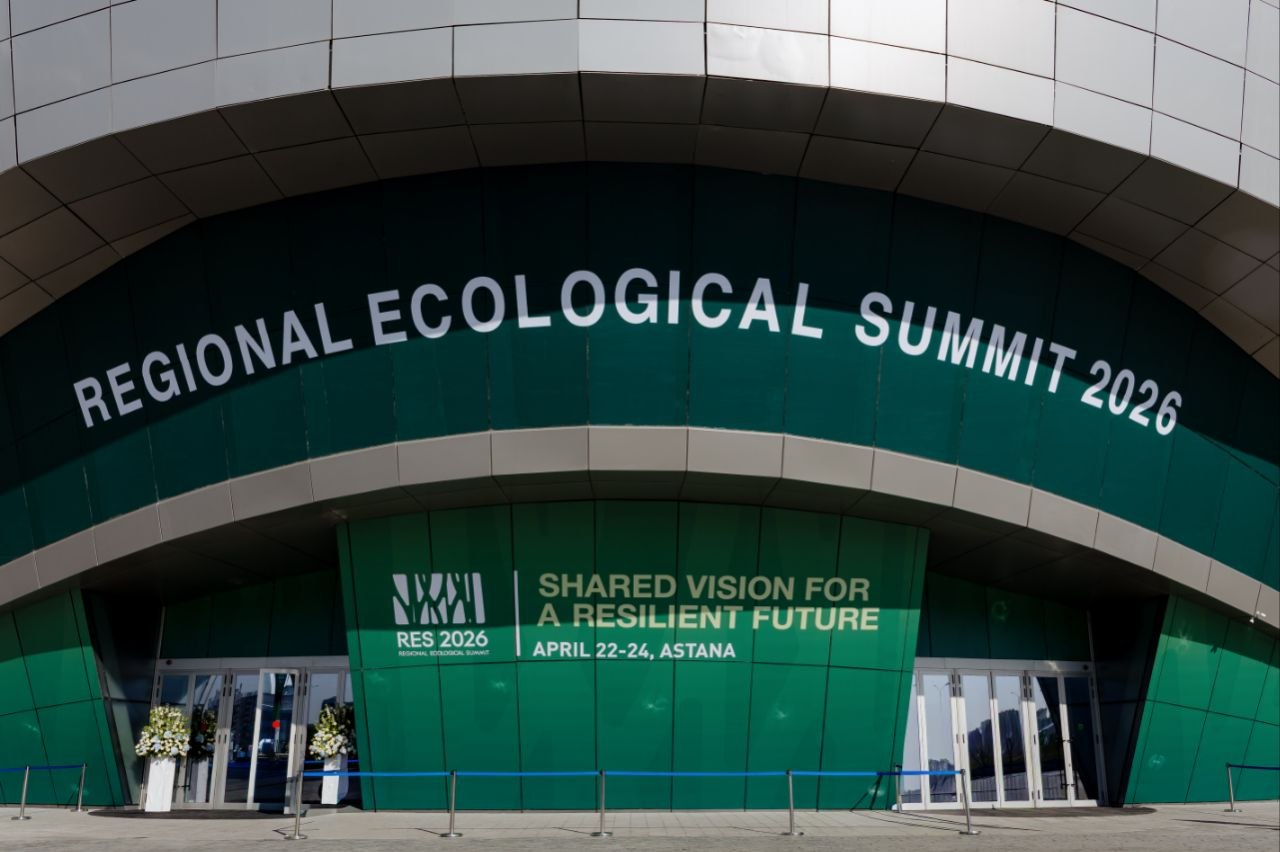
A major Regional Ecological Summit 2026 (RES 2026) «Common Vision for a Sustainable Future» was held in Astana from April 22-24, where leaders from Central Asian countries and partners discussed growing threats — from water scarcity to glacier melting. The outcome was new initiatives, joint programs, and an attempt to develop a unified environmental agenda for the region.
Official representatives from 15 countries participated in the event, including heads of state, public activists, politicians, and researchers, to discuss environmental and sustainable development issues in Central Asia.
The summit served not only as a platform for dialogue but also as a starting point for real initiatives and allowed for the formation of a unified regional environmental agenda with a concrete action plan for the coming years.
During the summit, 58 key meetings were held, including 21 high-level meetings and 4 meetings of Central Asian countries. At the opening, presidents of Central Asian countries, Armenia, Georgia, Mongolia, and the Prime Minister of Azerbaijan delivered speeches.
President of Tajikistan Emomali Rahmon also visited Astana and spoke at the summit.
What did the presidents say?Kassym-Jomart Tokayev, President of Kazakhstan, noted in his opening speech that Central Asia faces a number of common problems — water scarcity and inadequate management, desertification, glacier melting, air pollution, and biodiversity vulnerability. He emphasized that positive results can only be achieved through joint efforts.
According to him, environmental policy is often developed without considering the needs of developing countries. Therefore, the transition to a «green» economy must be fair, balanced, and stimulating.
Tokayev highlighted that the Aral Sea is a vivid example of the consequences of misguided policies, and currently, about 36% of its northern part has been restored. He stated that Kazakhstan has proposed an interstate program for the preservation of the Caspian Sea and has established the Caspian Research Institute.
Official representatives from 15 countries participated in the event, including heads of state, public activists, politicians, and researchers, to discuss environmental and sustainable development issues in Central Asia.
The summit served not only as a platform for dialogue but also as a starting point for real initiatives and allowed for the formation of a unified regional environmental agenda with a concrete action plan for the coming years.
During the summit, 58 key meetings were held, including 21 high-level meetings and 4 meetings of Central Asian countries. At the opening, presidents of Central Asian countries, Armenia, Georgia, Mongolia, and the Prime Minister of Azerbaijan delivered speeches.
President of Tajikistan Emomali Rahmon also visited Astana and spoke at the summit.
What did the presidents say?Kassym-Jomart Tokayev, President of Kazakhstan, noted in his opening speech that Central Asia faces a number of common problems — water scarcity and inadequate management, desertification, glacier melting, air pollution, and biodiversity vulnerability. He emphasized that positive results can only be achieved through joint efforts.
According to him, environmental policy is often developed without considering the needs of developing countries. Therefore, the transition to a «green» economy must be fair, balanced, and stimulating.
Tokayev highlighted that the Aral Sea is a vivid example of the consequences of misguided policies, and currently, about 36% of its northern part has been restored. He stated that Kazakhstan has proposed an interstate program for the preservation of the Caspian Sea and has established the Caspian Research Institute.
Комментарии (0)