When Fire, Sun, and Water Were Gods. On the History of Zeravshan and the Treasures of the Gold-Bearing Valley
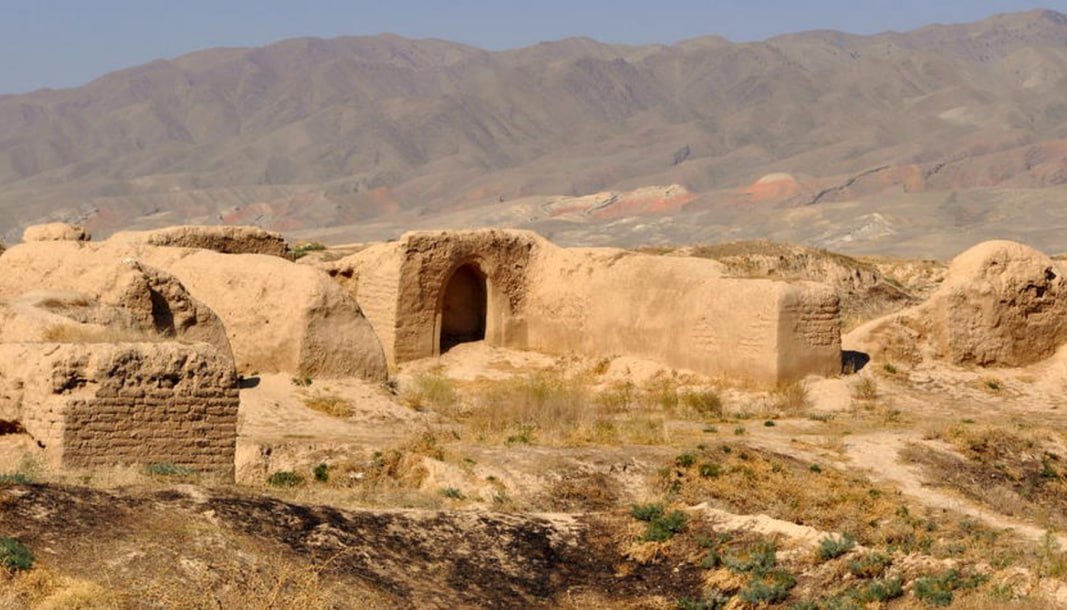
Archaeological excavations in the Zeravshan Valley, initiated in the mid-1930s and continuing to the present day, have unveiled the astonishing and rich world of the Sogdians — a people who made an invaluable contribution to world culture.
Archaeology, layer by layer, reveals to us new sensational finds from what seemed to be a lost world of our ancestors. Among these discoveries are many masterpieces of world art and architecture.In the «Avesta,» ancient hymns of the Zoroastrians created more than 2,500 years ago, there are lines about the golden peaks from where the Iranian god Mithra sees the entire Aryan land, among which is Gava, which is in Sogdiana. This is probably the earliest mention of the Zeravshan Valley. Deciphered documents from the castle on Mount Mug have confirmed the East Iranian roots of the Sogdian language and revealed the tragic events for the Sogdians associated with the Arab conquest of the 8th century.
Sensational excavations of ancient Panjakent have allowed the unveiling of a previously unknown, vibrant, and distinctive picture of life in a small Sogdian town.
Panjakent, or as the Sogdians called it — Panch, arose in the 4th-5th centuries and was destroyed by the Arabs in the 8th century. The city was abandoned by its inhabitants and was not revived at this site, allowing archaeologists to study it in detail since there were no later layers as in the capital cities of Sogd: Bukhara and Samarkand.
The city was located on two terraces surrounded by fortress walls: on the upper one, rising above the surroundings, was the citadel with the ruler’s palace and, below, the shahristan, the actual city where most of the population lived.
Outside the city walls was a vast suburb consisting of rural estates with castles, as well as a necropolis where townspeople buried their relatives in small crypts in ceramic ossuaries according to the Zoroastrian rite.In the citadel, separated from the rest by a deep moat, was a large palace, which was a multi-tiered complex where the ruler’s chambers were located at the top. From the open terraces of the palace, a picturesque panorama of the city below unfolded.
The parade part of the palace included a spacious throne room of 250 square meters with a raised platform, which could be accessed via a ramp located on the central axis.
Two powerful square pylons and a deep niche in the back wall imparted the interior with appropriate solemnity and monumentality.
In the elevated part of the hall sat the ruler on the throne, while the subjects sat in the lower part of the hall on clay benches that stretched along the walls. The throne room was covered with an impressive complex wooden inclined-stepped structure with a skylight at the zenith.
Fragments of carved wood and numerous wall paintings indicate that in terms of decorative richness, the palace of the Panjakent ruler Devashtich was not inferior to the palaces of the rulers of Bukhara — the Bukhar Khudats, the Ishkids of Samarkand, and the Ushrushana Afshins of Bunjikat.
Комментарии (0)