Emomali Rahmon signed an Agreement on Friendship, Good Neighborliness and Cooperation in Central Asia
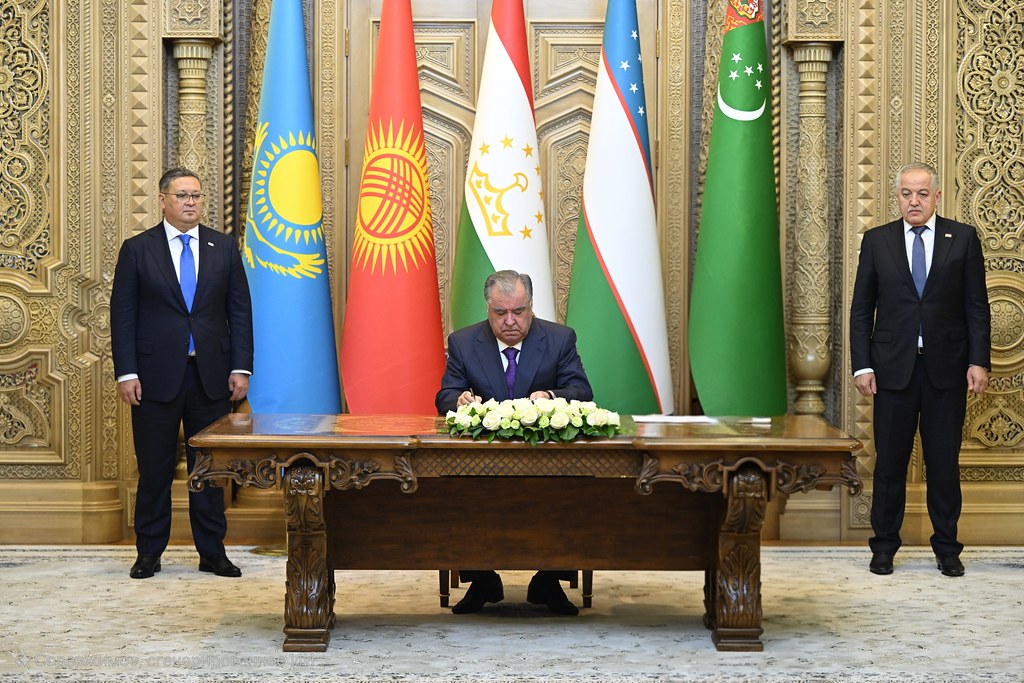
President of Tajikistan Emomali Rahmon has signed an agreement on Friendship, Good-Neighborliness and Cooperation for the Development of Central Asia in the 21st Century.
According to the press service of the head of state, the document signing ceremony took place in Dushanbe on August 28 after a meeting with Deputy Prime Minister, Kazakh Foreign Minister Murat Nurtleu. The parties stressed that joint work on the comprehensive implementation of this Treaty «will become a factor in ensuring and strengthening peace, stability and sustainable development in the region.»
During the meeting, issues of a political, trade, economic, cultural and humanitarian nature were discussed, as well as cooperation between the two countries in these areas in the spirit of strategic partnership and alliance. In addition, the schedule of upcoming meetings and contacts at the highest level, the preparations for the CIS summit and the Central Asia–Russia meeting in Dushanbe were discussed.
The Treaty of Friendship, Good-Neighborliness and Cooperation for the Development of Central Asia in the 21st Century was signed on July 21, 2022 in Cholpon Ata by the Presidents of Kazakhstan, Uzbekistan and Kyrgyzstan. Tajikistan and Turkmenistan then refrained from signing, stating the need to complete domestic procedures in their countries.
The signatory countries undertake to «work closely together to strengthen peace, stability and security in the region,» and to develop cooperation in the military and military-technical fields.
If necessary, the parties undertake to provide each other with comprehensive support and mutual assistance to prevent threats to their independence, sovereignty and territorial integrity. At the same time, they must «refrain from the use of force or threat of force in interstate relations between themselves, undertake not to join military alliances, blocs or other associations of states directed against the contracting parties.» They should not take part in actions directed against any of them.
The parties will resolve disputes between themselves «exclusively within the framework of dialogue through peaceful diplomatic means, including through the creation of appropriate mechanisms for interaction, if necessary.» They undertake to prevent third countries from using their territories, communications systems and other infrastructure to the detriment of each other’s sovereignty, security, stability and territorial integrity.
source: asiaplustj.info
According to the press service of the head of state, the document signing ceremony took place in Dushanbe on August 28 after a meeting with Deputy Prime Minister, Kazakh Foreign Minister Murat Nurtleu. The parties stressed that joint work on the comprehensive implementation of this Treaty «will become a factor in ensuring and strengthening peace, stability and sustainable development in the region.»
During the meeting, issues of a political, trade, economic, cultural and humanitarian nature were discussed, as well as cooperation between the two countries in these areas in the spirit of strategic partnership and alliance. In addition, the schedule of upcoming meetings and contacts at the highest level, the preparations for the CIS summit and the Central Asia–Russia meeting in Dushanbe were discussed.
The Treaty of Friendship, Good-Neighborliness and Cooperation for the Development of Central Asia in the 21st Century was signed on July 21, 2022 in Cholpon Ata by the Presidents of Kazakhstan, Uzbekistan and Kyrgyzstan. Tajikistan and Turkmenistan then refrained from signing, stating the need to complete domestic procedures in their countries.
The signatory countries undertake to «work closely together to strengthen peace, stability and security in the region,» and to develop cooperation in the military and military-technical fields.
If necessary, the parties undertake to provide each other with comprehensive support and mutual assistance to prevent threats to their independence, sovereignty and territorial integrity. At the same time, they must «refrain from the use of force or threat of force in interstate relations between themselves, undertake not to join military alliances, blocs or other associations of states directed against the contracting parties.» They should not take part in actions directed against any of them.
The parties will resolve disputes between themselves «exclusively within the framework of dialogue through peaceful diplomatic means, including through the creation of appropriate mechanisms for interaction, if necessary.» They undertake to prevent third countries from using their territories, communications systems and other infrastructure to the detriment of each other’s sovereignty, security, stability and territorial integrity.
source: asiaplustj.info
Комментарии (0)